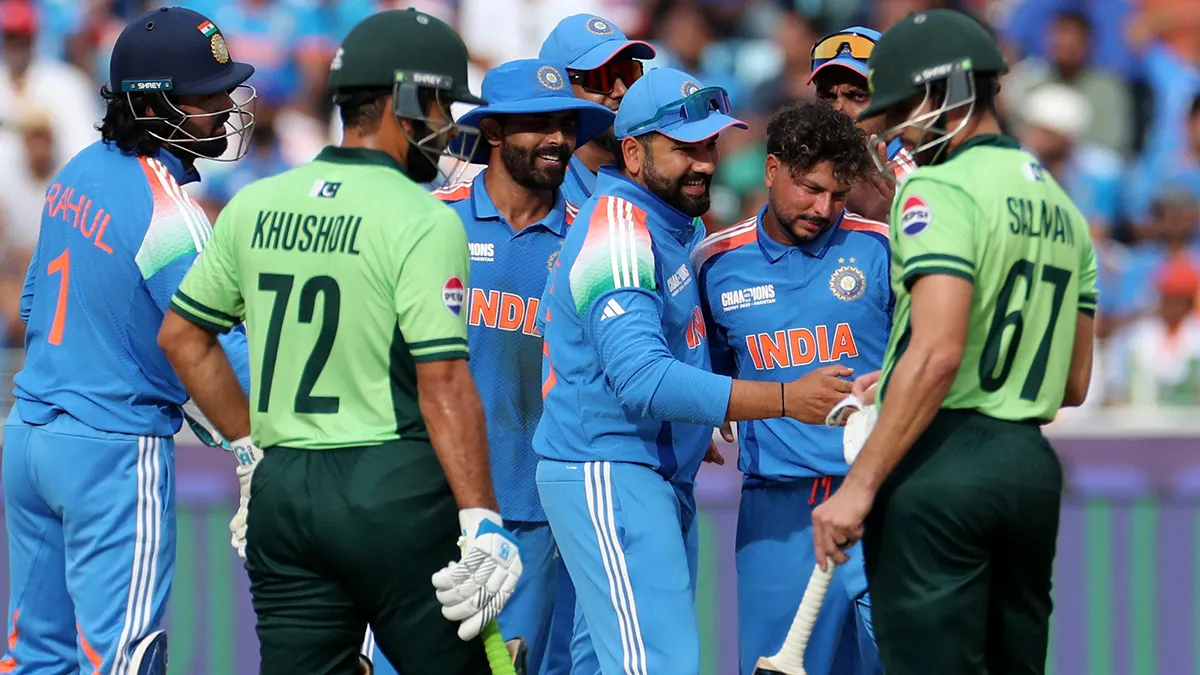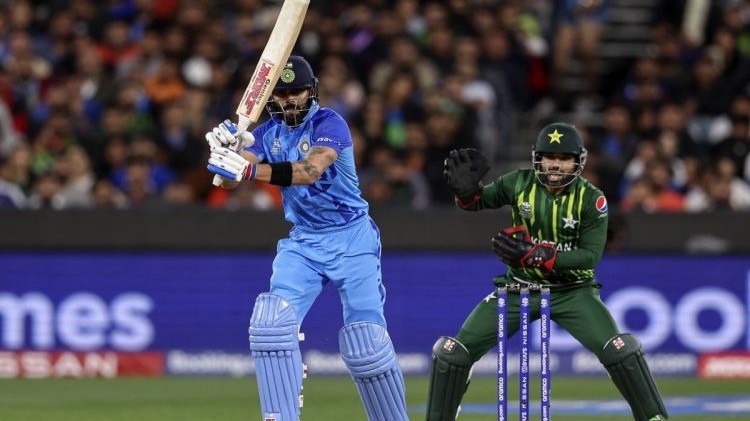
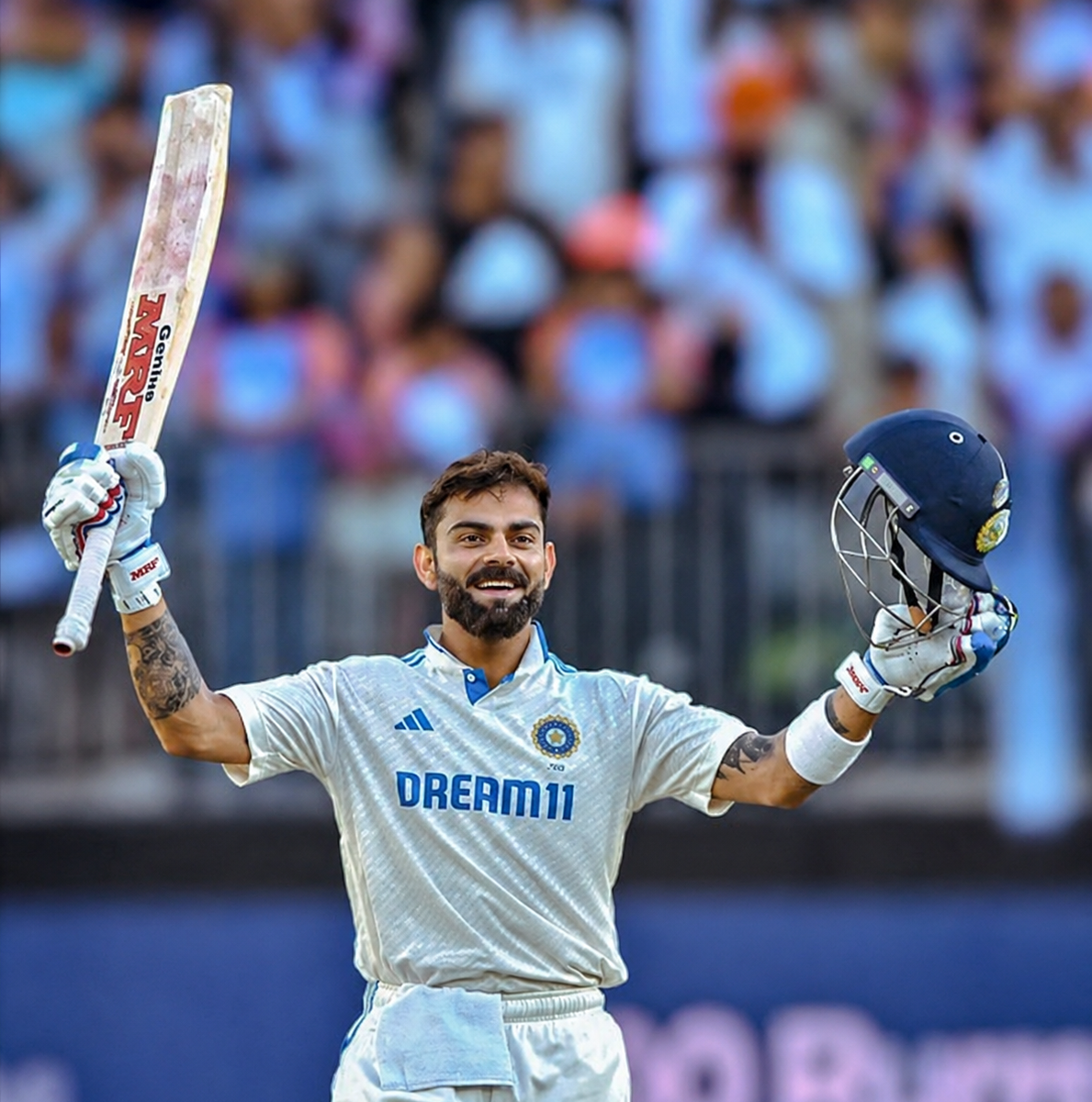
It is day 2 of the test match between India and Afghanistan when I started writing this. Team India is in a very dominating position right now, but the Afghans are not doing too badly either. However, amidst all this, a very hot topic of debate has raised its head.
The topic? People are not coming to watch test matches because a superstar, namely, Virat Kohli, has retired from the format. Not that this is the first time this debate has arisen, but I feel it is time we actually sit and logically talk about it. From the heading, you must’ve already guessed what I will be talking on: THE SUPERSTAR CULTURE IN INDIA.
India is not really a stranger to having these ‘superstars’. For decades, we have seen them act in Bollywood, where it doesn’t matter if you’re acting well or doing a good movie; if you are a superstar, you’ll sell tickets. As simple as that. And over the years, this cancer has seeped into cricket as well.
Cricket, just like any sport, has good players, great players, and then there are some that reach GOAT level status, and to be honest, there’s nothing wrong with fans calling them that or even players calling themselves ‘great’. At the end of the day, players who have that sort of confidence (considering that they perform at that level as well) do end up achieving crazy things. But things will start to get bad when they think they are above everyone and everything must be to their liking, or they get hurt. Or to be clear, their egos get hurt.
Indian cricket has had its fair share of superstars, but the first name that pops up is always Sachin Tendulkar. The era of Sachin Tendulkar was honestly different, though. I’ve never heard any stories of when Tendulkar got a head coach changed because he didn’t like him or retired from a format altogether because he was told he would have to improve his form to get back into the team.
This brings me to a player, who I feel has quite an inflated ego, which has helped him achieve great things, and as a result has given him an ego boost too.
The story of Virat Kohli’s ego and influence goes all the way back to 2016, when he was leading India across all 3 formats. Back then, Anil Kumble, one of India’s legends, was made the head coach, and from the stats, he did a pretty good job as well. However, despite all this, Kohli and Kumble had quite a public breakup. Why? Because Kohli didn’t like how Kumble coached, and then there was the whole thing over the selection of the squad and who should play.
While, debates over selection are only natural, the fact that the board decided to push Kumble out of the team because ‘Kohli did not make him feel welcome in the dressing room’ speaks quite a bit about how much power and influence was given to him within the team, which then further gave him an ego boost.
Now jump forward to January of 2025, India has just suffered another humiliating series to Australia in the Border-Gavaskar Trophy. What stung was not just the series loss but the road leading to this. India was used to dominating tests at home for over a decade, but slowly, after 2023, this started to change. We did not immediately lose a lot of matches or series, but we saw a Virat Kohli and Rohit Sharma who were degrading as red-ball batters. While their white ball form was pristine, somehow the two were unable to continue their grip in the longer format.
While let’s be honest, Rohit was never looked at as a traditional test batter because of his on and off performances in the format, however, Kohli was. The batsman who once dreamed of 10,000 test runs as his goal was losing his touch, one step at a time.
The downfall of Virat Kohli in hindsight started in 2021, after all, he played only one match in the 2020/21 BGT. Even though he received enough criticism for skipping the elite series, it did give Ajinkya Rahane the platform to cement his legacy as one of the best test captains and players who ever donned the whites. In 2021, Virat Kohli played 19 innings across 11 test matches and managed to keep an average of just 28.21 while scoring 50+ runs just 4 times and even getting dismissed for a duck 4 times (the most for him in a calendar year).
Since then, the graph has only moved in the downward direction except for 2023, which was a phenomenal year for Kohli. Since 2021, Kohli’s average has been 26.5 (2022), 55.91 (2023), 24.52 (2024), and 11.5 (2025). In these figures, you can see how the King was slowly losing his spot while the likes of Steve Smith, Joe Root, and Kane Williamson went strong. If we talk about the reasons for this rapid decline in his batting performance, the biggest one that strikes me is the outside off trap.
The outside off trap is no stranger to Kohli, who has faced a problem leaving balls on the 4th or 5th stump for way too long. The first time we probably saw this become a problem was back in 2014 during the England tour, where James Anderson completely owned him. Then, he worked hard and got through it, although not permanently. Even though he did see this problem surface every now and then, it was never that serious. He would usually buckle up, and this problem would not last more than a couple of games, usually.
Since 2021, Kohli had started to get haunted by the outside off trap once again. Nothing major at first, but slowly it started to become prominent, and things kind of reached the peak post the ICC World Cup 2023. It was this year that almost sealed Kohli’s career. In the 2024/25 season, Kohli only managed to get one 50+ score and one century. At the same time, across the 19 innings he batted, he was caught out 12 times! And more often than not, it was the ball on the 4th or the 5th stump.
It was after the disastrous New Zealand series that the management, as well as pundits, said that he needed to play more domestic red-ball cricket so he could get over this issue. After all the hullabaloo, Virat did play domestic cricket for Delhi, but alas, during that match, he got out similarly as well. Then arose the question: Does Kohli still have it in him to play test cricket for India?
After his poor performance in the 2024/25 BGT, the questions just got louder. It seemed the management, especially the head coach, Gautam Gambhir, was ready to bench India’s star player. And to be honest, it did make sense. Gambhir has always been against the superstar culture within the Indian team, especially since the 2011 World Cup win, when Dhoni was allegedly given more credit than others. So when Gambhir decided it was time to drop Rohit and Virat, no doubt, it did hurt fans’ sentiments. More importantly, it probably hurt Kohli’s ego.
Soon after the rumours of Rohit & Kohli being sidelined for the England tour, which was to take place 6 months later, emerged, we got the news nobody wanted. Rohit Sharma resigned from test cricket, and soon enough, even Virat Kohli ended his legendary test career. A player who once dreamt of scoring 10,000 runs in test cricket quit his dream, all of a sudden.
The real question that stayed in everybody’s mind was: Why now? From a fan’s perspective, I could only find two reasons.
One, over the years, Virat was slowly turning into a family man. Given that he was 36, he knew his career was coming to an end despite the fact that he could still play for India till 2028-29 quite easily. At the same time, it made sense that he take time off to spend time with his family, focus on his fitness and aim for the 2027 ICC ODI World Cup, a trophy that gave him immense heartbreak back in 2023, just like Rohit Sharma.
The 2nd reason I sense is his ego. During the IPL, he gave an explosive interview where he said that the Indian team management, after the BGT, asked him to prove his worth and show that he deserved a place in the test team. According to him, it was then that he felt that he did not need to prove anything to anyone anymore.
While his feelings are valid, the national team should always come first. If you’re a player who isn’t doing so well and blocking a position, it should be the player’s duty to show that he can still do it. You simply can’t expect a place in the squad or in the playing XI if you’re not performing & in a way becoming a liability for the team despite being a living legend.
It was then that Gautam Gambhir’s statements about ending superstar culture in India made sense. If a player expects to be in the national team despite extremely poor performances, while ignoring pleas to play county or domestic cricket to regain form, then I feel he should be dropped.
If great players like Ajinkya Rahane or Cheteshwar Pujara are not exceptions to being dropped from the team, neither should Virat Kohli.
To be honest, what hurt me more was not the fact that Kohli thought he was done with test cricket and decided to retire. What hurt me more was the fact that it was Virat’s ego and the fact that he was ‘hurt’ when asked to prove his worth despite a string of bad performances, which is a quality we never associated with him.
While there is a good chance we might see a player as good as Virat Kohli, be it in captaining the side or in his batting prowess, it is a fact that he will never be a ‘superstar’ if the current management’s mentality persists. For now, it is simply unfortunate how the one thing, i.e., ego, that made Virat Kohli great also ended up finishing his career as a test batsman.